Augmentative and Alternative Communication (AAC)
Augmentative and Alternative Communication (AAC) includes all the ways someone communicates besides using an oral language. People of all ages can use AAC if they have difficulty with speech or language skills. Please note that AAC systems can help to support or develop spoken language; they do not prevent this.
AAC comes in all shapes and sizes and is generally broken up into two categories: Unaided and Aided AAC.
Unaided AAC are communication methods that do not rely on any external tools or devices. Instead, the person uses what they already have available—typically their own body. These communication methods are often called ‘No-Tech AAC’ as they do not utilize any form of technology. Examples of Unaided AAC include: eye gaze/eye contact, facial expressions, body language, gestures, and manual signs.
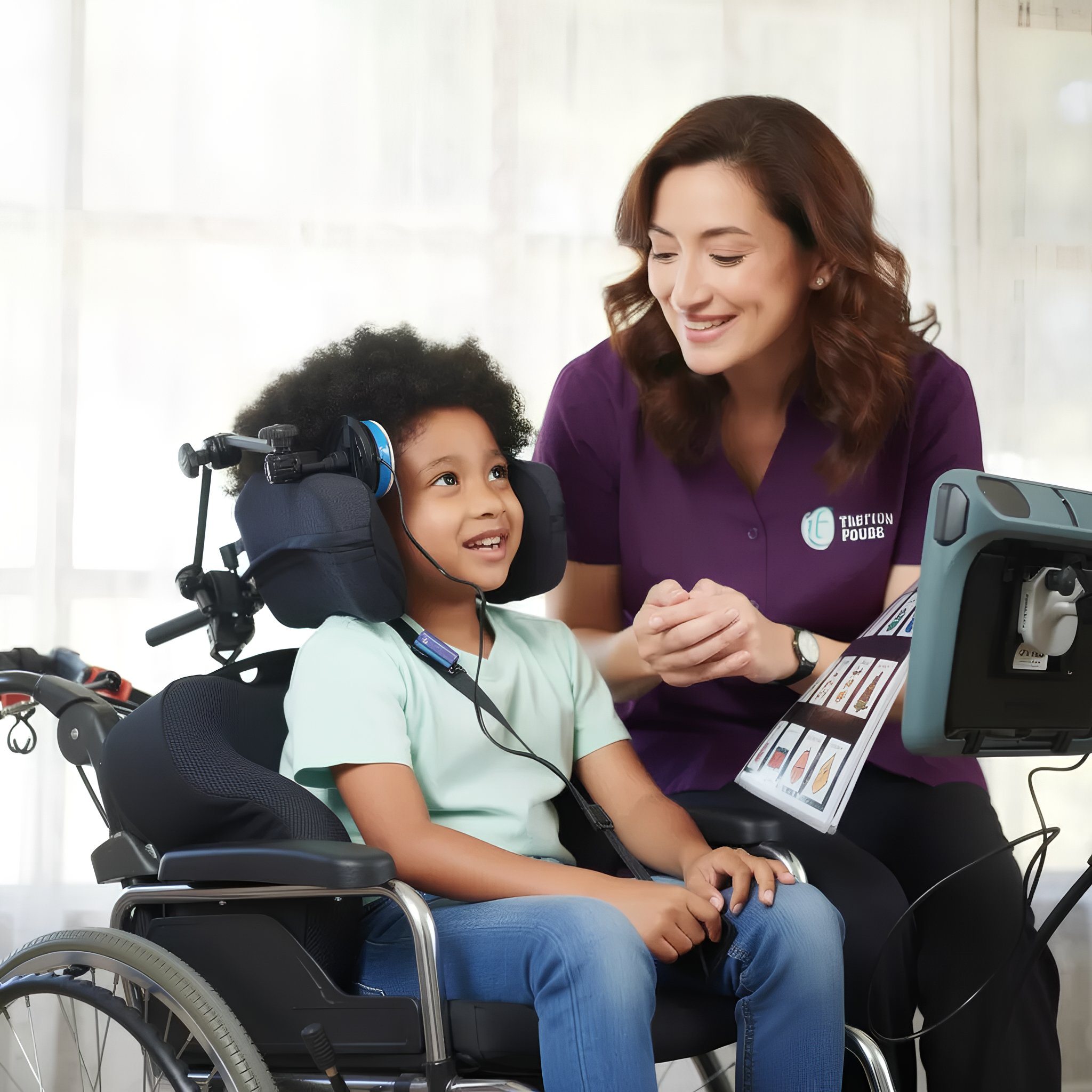
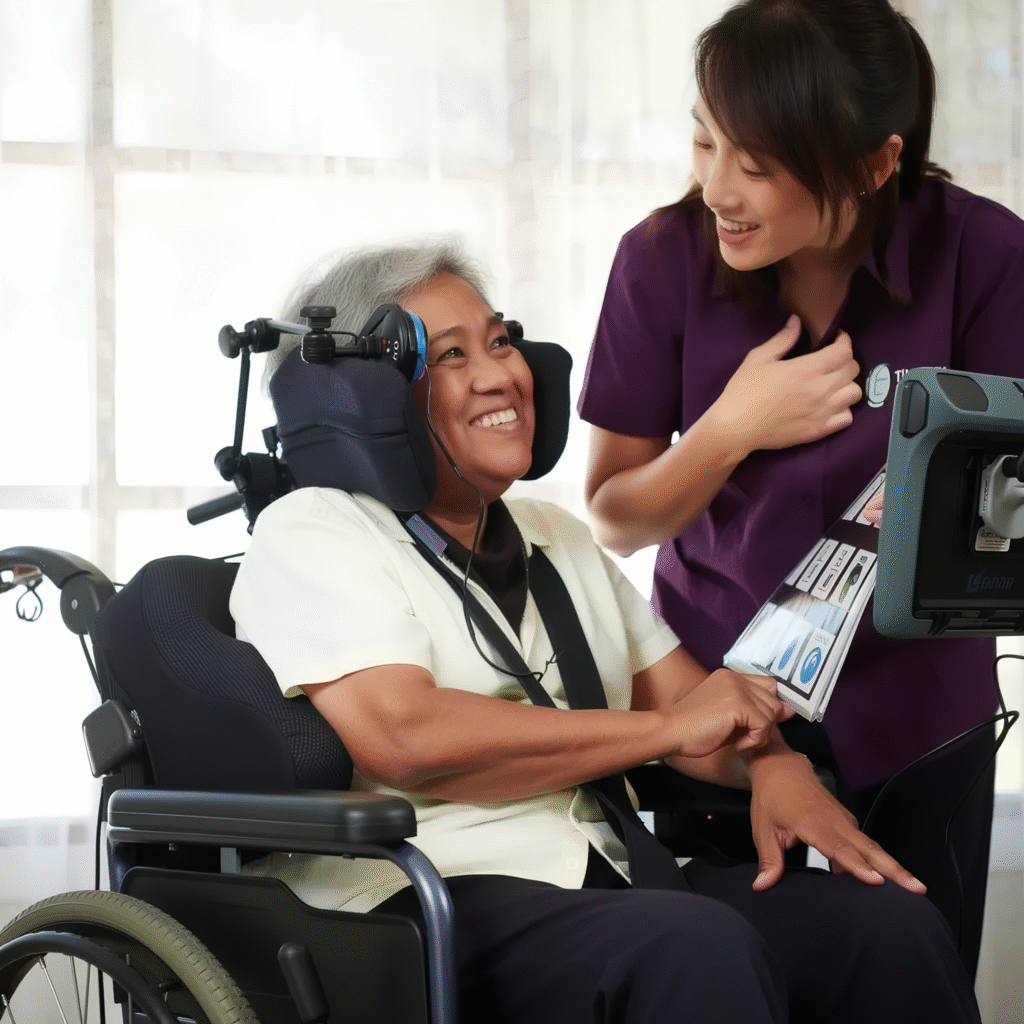
Aided AAC is communication using an external device to support and aid communication. These devices can be broken into two categories, Low-Tech and High-Tech.
- Low-Tech AAC refers to all external devices that do not contain ‘batteries’. These include but are not limited to Aided Language Displays, PODD books, Communication Books, and PECS.
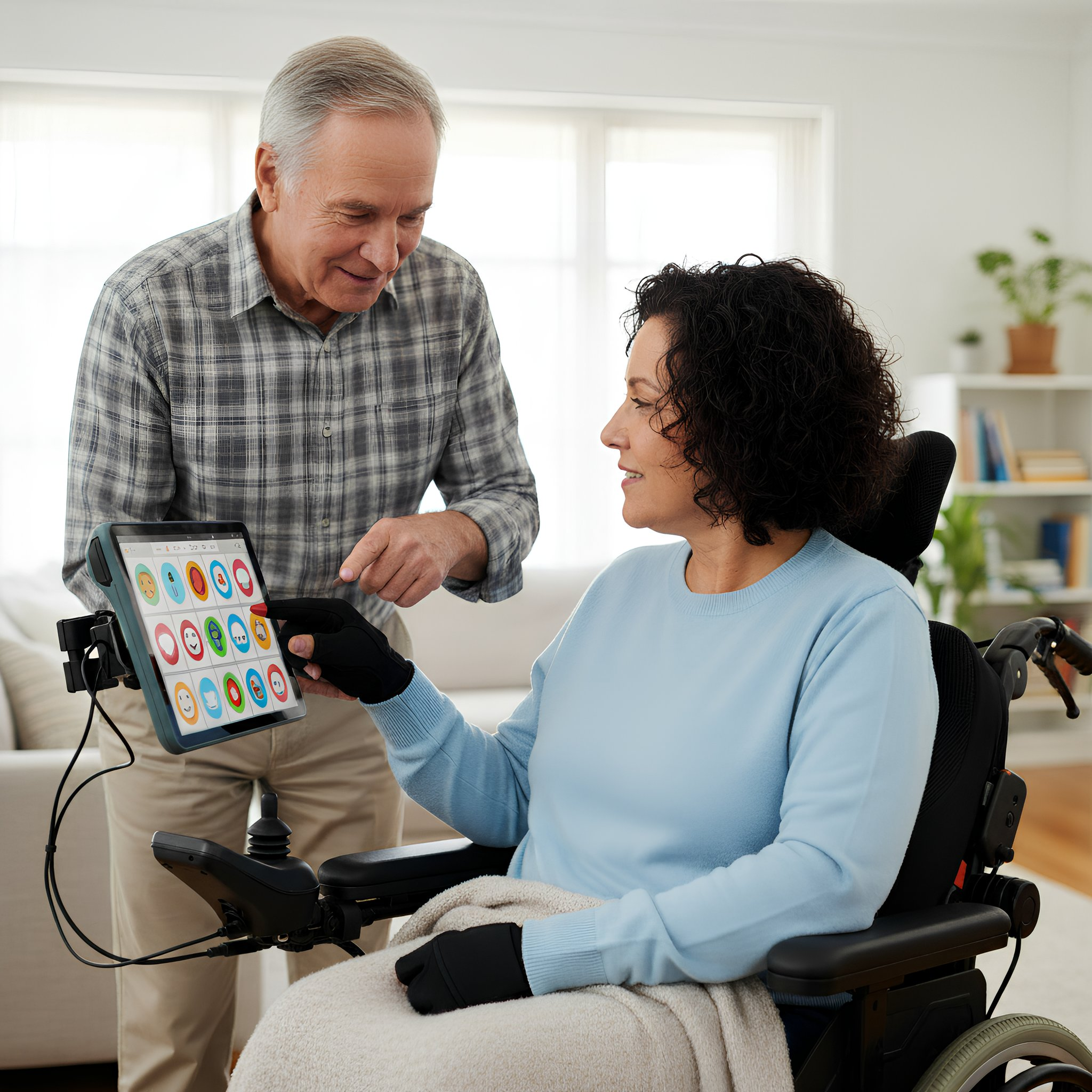
- High-Tech AAC refers to all external devices that contain a ‘battery’. These devices contain different layouts and can be further broken up into two categories “static” and “dynamic” displays.
- Static Displays are AAC systems that have fixed layout that does not change like a keyboard, or communication board with a voice output (i.e., GO-Talk).
- Dynamic Displays are AAC systems that have an interactive layout that can consistently be adapted and changed. (i.e., tablet/computer based communication programs such as Proloquo2go, Lamp, TD-SNAP, PODD, GRID).
- Static Displays are AAC systems that have fixed layout that does not change like a keyboard, or communication board with a voice output (i.e., GO-Talk).
It is important that you consult with a speech pathologist to ensure the right AAC is chosen for yourself or loved one. Please note that AAC can be made accessible for individuals of all ages using switches, touch access, or even eyegaze.
Speak With Us offer comprehensive AAC trials / assessment (Click HERE for more information for this assessment process).